Child of God, Christian Embroidery
A Practical Review for Small Business Merchandise & Branded Patches
As an embroidery designer who’s developed and tested hundreds of machine embroidery designs for small businesses—from boutique bakeries to faith-based apparel brands—I approached Child of God, Christian Embroidery with a clear question: does it translate beyond devotional decor into functional, brand-forward merchandise? The short answer is yes—but only when applied intentionally. This isn’t just a decorative motif; it’s a brand statement in stitch form.
First Impression: Warm, Timeless, and Professionally Grounded
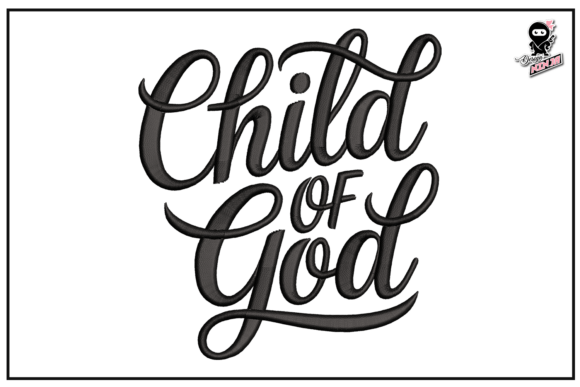
Right away, Child of God, Christian Embroidery reads as warm and reverent—not ornate or overly stylized. It avoids dated script tropes while retaining spiritual sincerity. That balance makes it ideal for small business owners who want to express faith without sacrificing professionalism—think a florist adding subtle embroidery to aprons, a café stitching it onto barista caps, or a handmade studio using it as a signature patch on tote bags. It feels classic, not trendy; sincere, not performative. That authenticity strengthens brand identity before a single stitch is made.
Real-World Performance Across Merch Categories
In actual production, Child of God, Christian Embroidery shines where clarity and emotional resonance matter most. As an embroidered patch sewn onto denim jackets or canvas totes, it holds visual weight without overwhelming. On staff uniforms—especially aprons or chest pockets—it reads cleanly at 3–4 inches wide, supporting both recognition and dignity. For cap embroidery, the design’s balanced proportions (assuming standard lettering and icon integration) adapt well to front-panel curvature when digitized with proper underlay and pull compensation.
For custom apparel like work shirts or boutique merchandise, this machine embroidery design supports consistency across product lines. Pair it with minimalist typography or a complementary cross motif, and you’ve built a cohesive set of design assets. As a customer gift accent—say, stitched onto linen tea towels or ceramic mug sleeves—it elevates perceived value. And for Etsy sellers or craft businesses, Child of God, Christian Embroidery works beautifully in printable mockups: its clean outlines and moderate detail render crisply in digital previews, helping buyers visualize the finished product before purchase.
Where to Apply Caution—Not Limitation
This isn’t a one-size-fits-all file. Use caution on very small patch sizes (under 2 inches), especially if the original digitization includes fine serifs or tight spacing between “Child” and “of God.” Tiny lettering can blur on textured fabric or during frequent washing—critical for staff aprons or reusable tote bags meant for daily use. Cap fronts demand careful testing: curved surfaces compress stitch density, so confirm the design maintains legibility without excessive crowding.
Dark uniforms require high-contrast thread colors—opt for bright white, ecru, or gold metallics rather than pastels. Likewise, high stitch density (if present in the file) may cause puckering on lightweight cotton or stretchy knits unless paired with appropriate cutaway or tear-away stabilizer. Always test on your exact fabric: a linen blend behaves differently than poly-cotton twill, and that difference impacts how the finished product feels—and lasts.
How It Strengthens Brand Identity & Customer Trust
For faith-aligned small businesses, Child of God, Christian Embroidery does more than decorate—it signals alignment. When customers see it on a bakery’s delivery bag or a pet brand’s bandana, it quietly affirms shared values. That builds trust faster than slogans ever could. Visually, it adds warmth and humanity to otherwise generic merch, reinforcing a handmade product ethos even when produced at scale.
Consistency matters: using this embroidery file across multiple touchpoints—caps, totes, packaging accents, event merch—creates visual rhythm. That repetition boosts recognition, especially in local markets where word-of-mouth and storefront presence drive growth. And because it avoids cliché, it positions your brand as thoughtful, not transactional—a subtle but powerful differentiator for creative studios or community-focused shops.
Essential Designer Notes Before Production
- Test in black and white first—to assess contrast, spacing, and negative space without color distraction.
- Verify small-patch viability—resize the digital embroidery file to 1.75” and check if letterforms remain distinct.
- Review thread color pairings—especially for dark fabrics. White or ivory often outperforms cream for readability.
- Inspect kerning and line breaks—“Child of God” must flow naturally, not look cramped or disjointed.
- Confirm hoop size compatibility—some versions may require larger hoops; match this to your machine’s limits.
- Test on real fabric + stabilizer combo—no simulation replaces tactile feedback from your actual production setup.
- Create a client-facing mockup—use the embroidery file in a printable mockup to secure approval before stitching begins.
- Compare beside existing design assets—does it harmonize with your logo, fonts, and brand palette?
- Confirm commercial licensing—since this is intended for small business merch and branded patch use, ensure the embroidery file permits resale and distribution.
Remember: the phrase “This machine embroidery design comes with multip…” suggests multiple formats may be included—but always verify file types, sizes, and usage rights before committing to bulk production. If details aren’t listed clearly, contact the seller. Clarity here prevents costly rework later.
Ultimately, Child of God, Christian Embroidery earns its place in your commercial embroidery toolkit—not as filler, but as a meaningful, versatile asset. When used with intention, it helps small businesses speak truthfully, stitch by thoughtful stitch.