Crab Digital Machine Embroidery Applique
A Playful, Practical Applique That Feels Like Summer in Stitch Form
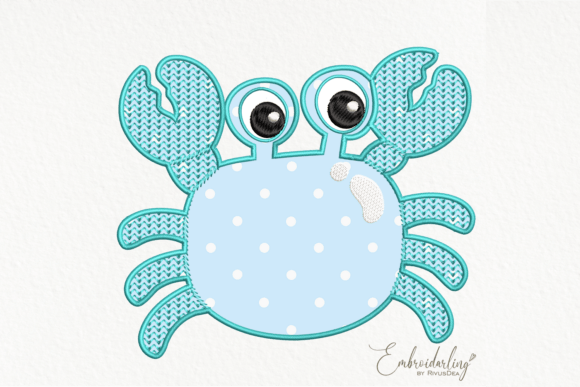
As a designer who’s stitched hundreds of machine embroidery files for clients—from boutique baby brands to Etsy craft sellers—I opened the Crab Digital Machine Embroidery Applique expecting charm, not complexity. What I found was a design that lands exactly where it should: joyful, legible at small scale, and built for real-world wear. It’s not overly detailed, but it doesn’t need to be. Its strength lies in confident shape, balanced negative space, and that unmistakable crab silhouette—curved claws, rounded body, friendly asymmetry. It reads instantly as “crab,” even at 2.5 inches tall on a toddler’s onesie or a linen tea towel.
Where This Applique Fits Naturally (and Where It Shines Brightest)
I recently used the Crab Digital Machine Embroidery Applique to finish a set of custom beach-themed kitchen towels for a local café’s summer launch. The result? A tactile, cheerful accent that held up beautifully after multiple washes—and more importantly, customers kept asking where they could buy one. That’s the sign of a well-considered embroidery file: it enhances the product without overwhelming it.
This applique thrives on items where personality meets function: embroidered patches for kids’ backpacks, sweatshirt front panels for summer camps, pillow covers for coastal nurseries, and aprons for small-batch bakeries with ocean-inspired branding. As an applique design, it invites fabric contrast—think navy denim base with coral felt claw accents—or clean monochrome satin stitch on ivory cotton. It’s equally effective as a standalone motif or grouped with simple seashells or waves for a cohesive digital embroidery file collection.
For Etsy sellers and small shop products, this is low-risk, high-recognition design work. Parents recognize it immediately. Kids point and name it. That kind of instant connection matters when you’re curating a handmade product line or building brand consistency across seasonal collections.
What You’ll Notice When You Stitch It—Not Just What You See
The Crab Digital Machine Embroidery Applique uses smart stitch economy. No dense fill stitches drowning out texture; instead, thoughtful satin stitch outlines define the shell and claws, with light running stitch for subtle detail (like tiny leg segments). There’s breathing room between elements—critical when stitching on textured fabrics like terry cloth or looped linen. I tested it on a medium-weight cotton twill tote bag and a ribbed baby bodysuit: both held crisp definition without puckering.
That said, it’s not magic. On highly stretchy fabric (like lightweight jersey), skip the direct-apply route unless you use cutaway + tear-away stabilizer combo and reduce top tension slightly. And while it works on dark fabric, avoid ultra-dense black thread on black fabric—opt for matte navy or charcoal instead for better stitching clarity. For custom apparel, especially curved surfaces like caps, keep placement above the bill curve—not wrapping around the crown—where distortion can blur those charming claw tips.
Design Notes Every Embroidery Designer Should Check First
- Test on scrap fabric first—especially if using layered fabrics (e.g., quilted baby blankets) or blending thread colors for a custom look.
- Review stitch density before scaling beyond 4 inches; larger versions may need adjusted underlay or reduced density to prevent stiffness.
- Confirm hoop size compatibility; this design fits comfortably in a 4x4 hoop, but verify your version’s exact dimensions before batching orders.
- Inspect small details in your embroidery software—check how the claw tips and eye area render at your target size. Some machines soften fine points; a quick zoom helps spot potential loss of definition.
- Use proper stabilizer: medium-weight cutaway for knits, tear-away for stable wovens, and fusible web for applique layers if your workflow includes fabric prep.
- Test in black and white mockups—this reveals contrast issues fast, especially for printable mockups or digital previews you share with clients or on Etsy listings.
- Check licensing terms before selling finished items or bundling the embroidery file into kits—some sellers assume personal-use-only licenses cover commercial embroidery, and that’s a common misstep.
Why This Crab Design Builds Trust—Not Just Cuteness
In my experience, buyers don’t just buy a crab—they buy confidence. Confidence that the design won’t unravel after three washes. Confidence that the stitch count won’t overload their home machine. Confidence that it’ll translate well from screen to fabric without tedious editing. The Crab Digital Machine Embroidery Applique delivers that quietly. It avoids trendy over-detail (no micro-stitched gills or gradient fills) and opts instead for honest, functional embroidery language: clear edges, consistent stitch direction, and logical jump stitch placement.
That professionalism shows up in customer reviews. When a parent receives a personalized baby blanket with this crab centered neatly on the corner, they don’t see “just another fish-themed design”—they see care, intention, and craftsmanship. That perception lifts perceived product value, supports giftability, and reinforces trust in your craft business.
A Final Thought for Creative Entrepreneurs
If you’re choosing between dozens of marine-themed machine embroidery designs, let this one earn its place not because it’s the flashiest—but because it’s the most reliable. It’s the crab you reach for when you need a smile on a sweatshirt, a pop of personality on a patch, or a gentle anchor for a nursery wall hanging. It belongs in your working library alongside other quiet standouts: the kind that sell steadily, stitch cleanly, and make your clients say, “Yes—that’s exactly what I imagined.”