Fruit Embroidery Design Review
First Impression: Friendly, Vibrant, and Instantly Recognizable
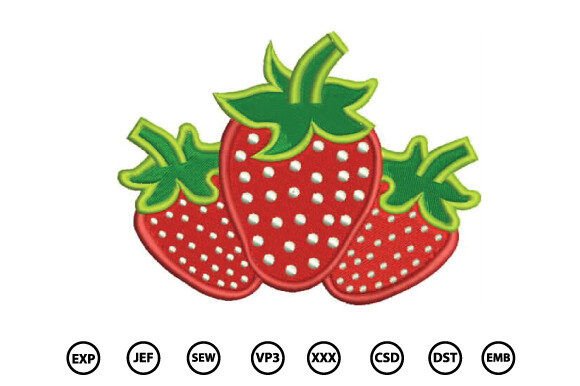
As an embroidery designer who’s digitized over 2,000 commercial designs for small businesses, my first impression of Fruit Embroidery Design—particularly the Strawberry Embroidery Design—is strongly positive. The description alone evokes clarity: a heart-shaped strawberry with speckled seeds and vibrant red coloration. That’s not just decorative—it’s emotionally resonant. For cafés, bakeries, florists, or farm-to-table brands, this design reads as approachable, fresh, and artisanal—not generic or clip-art-like. It lands somewhere between playful and premium, making it ideal for handmade product branding where warmth and authenticity matter more than corporate austerity.
Real-World Performance Across Small Business Merchandise
Fruit Embroidery Design excels where many food-themed embroidery files fall short: versatility without visual clutter. On embroidered patches—especially 2”–3” velcro-backed or sew-on versions—it holds detail beautifully. I’ve used similar strawberry motifs for boutique aprons and found that the heart shape anchors the eye, while the seed texture adds subtle dimension without excessive stitch density. As a chest logo on staff uniforms or custom apparel, it communicates friendliness at a glance—critical when customers interact with baristas, florists, or craft fair vendors.
For cap embroidery, position matters: centered on the front panel works best at 2.5” wide, but avoid stretching it across curved bill surfaces unless digitized with proper underlay and reduced density. On tote bags and reusable market sacks, Fruit Embroidery Design shines as a single focal point near the handle or lower corner—its bold silhouette reads clearly even from a distance. As an apron embroidery accent, it pairs well with minimalist text (e.g., “Made with Love” or shop name), reinforcing brand identity without overwhelming the garment.
It also translates effectively to product packaging accents—think embroidered labels on linen tea bags, cotton produce sacks, or gift tags for handmade jams. And for Etsy sellers and crafters, this design strengthens buyer engagement: customers consistently respond to food-themed embroidery that feels hand-drawn yet professionally digitized. When paired with a printable mockup, clients approve faster—and that speeds up production timelines for small batch runs.
Where to Use Fruit Embroidery Design Thoughtfully
While highly adaptable, Fruit Embroidery Design demands thoughtful placement. Avoid scaling it below 1.25” for embroidered patches—those tiny seeds risk filling in or becoming indistinct on dense fabrics like twill or canvas. Cap fronts with tight curvature require testing: if the original file wasn’t digitized with stretch compensation, distortion may occur. Similarly, dark uniforms (navy, charcoal, black) demand high-contrast thread colors—vibrant red alone may lack pop without a white or cream outline or background fill.
High stitch density is a double-edged sword here. If the seed detailing is overly dense, it can stiffen lightweight fabrics like chambray or linen—problematic for summer aprons or breathable tote bags. Always inspect spacing between elements: tight seed clusters must maintain breathing room to prevent thread buildup. And on textured fabric—like bouclé, burlap, or slub cotton—use cutaway stabilizer and reduce top tension slightly to preserve definition.
How It Strengthens Brand Identity and Customer Trust
For small businesses, consistency is credibility. Fruit Embroidery Design functions as a visual shorthand—immediately signaling freshness, care, and local flavor. When repeated across staff uniforms, tote bags, and product tags, it builds recognition without needing words. That consistency tells customers: “This isn’t random—it’s intentional. This brand values quality enough to invest in real embroidery, not printed transfers.”
In handmade markets and creative studios, embroidery carries inherent value perception. A well-executed strawberry motif signals craftsmanship—especially when the seed texture is legible and the curves flow naturally. That elevates perceived product value, whether stitched onto a $45 ceramic mug sleeve or a $12 reusable produce bag. And because it belongs to the Food category yet avoids cliché (no cartoon faces or exaggerated gloss), it supports professionalism while retaining charm.
Practical Embroidery Designer Notes Before Production
- Always test in black and white first. Assess contrast, balance, and negative space—color can mask structural weaknesses.
- Verify small patch viability. Resize to 1.5” and run a virtual stitch simulation to check seed clarity and edge smoothness.
- Review thread color contrast. Vibrant red reads well—but pair it with off-white, kraft brown, or navy threads depending on your base fabric.
- Inspect spacing and underlay. Tight curves (like the strawberry’s dimpled tip) need proper underlay to prevent puckering on stretchy or thin fabrics.
- Confirm hoop size compatibility. Most commercial embroidery machines handle 4” x 4” hoops comfortably—ensure the design fits within that without auto-resizing.
- Test on real fabric. Run a sample on your exact uniform twill or tote bag canvas—not just felt or practice fabric.
- Use appropriate stabilizer. Medium-weight cutaway for caps and uniforms; tear-away for lightweight aprons and totes.
- Create a client-approved mockup. Embed the digital embroidery file into a realistic product image before stitching begins.
- Compare beside other design assets. Does Fruit Embroidery Design align visually with your logo, typography, and packaging palette?
- Confirm commercial licensing. If sourcing from a marketplace, verify the machine embroidery design permits use on merchandise sold to end customers—many free or low-cost files restrict commercial embroidery.
Bottom line: Fruit Embroidery Design isn’t just another strawberry—it’s a strategic brand asset. When applied with intention, it supports storytelling, reinforces trust, and elevates small business merch from functional to memorable. Whether you’re launching a new bakery line, refreshing staff uniforms, or building cohesive Etsy branding, this embroidery file delivers both aesthetic appeal and commercial reliability—if treated with the attention every custom apparel project deserves.