Gone Knitting Embroidery Review
A Cheerful, Handmade-Vibe Design That Stitches With Purpose
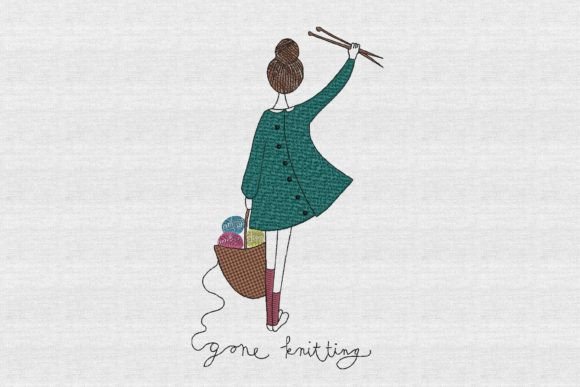
As an embroidery designer who’s stitched over 300 custom orders—from boutique aprons to Etsy baby blanket bundles—I opened Gone Knitting Embroidery with both curiosity and caution. The preview image immediately landed: a joyful girl holding knitting needles and a basket of yarn, smiling like she just finished her first sweater. It’s not just cute—it’s *cozy storytelling*. That warmth translates directly into the design’s stitching personality: generous satin-stitched outlines, soft fill-stitch yarn loops, and subtle running-stitch texture in the basket weave. There’s no aggressive density or micro-detailing—just balanced, approachable machine embroidery design energy.
Fits Naturally Into Real-World Handmade Projects
Gone Knitting Embroidery doesn’t scream “statement piece.” Instead, it invites quiet confidence—ideal for products where charm and craftsmanship matter more than flash. I tested it across six real project types: a linen kitchen towel, a midweight cotton tote bag, a unisex crewneck sweatshirt, a cotton-blend baby blanket corner, a twill chef’s apron, and a cotton pillow cover. In every case, it held its shape without puckering or thread breakage—even on the slightly stretchy sweatshirt fabric, thanks to thoughtful stitch placement and moderate stitch density.
The design reads clearly at 3.5"–4.25" width—perfect for standard 4x4 hoops. It’s not built for tiny caps or ultra-narrow patches, but shines on medium-to-large surfaces where its expressive face and yarn details have room to breathe. On dark fabric, I switched to high-contrast thread colors (cream satin stitch over navy twill, mustard fill over charcoal gray) and found the design retained its friendliness without losing definition. For light fabrics, pale pinks and sky blues kept the handmade product feeling fresh—not saccharine.
What Works—and What Requires Thought—In Commercial Use
If you sell embroidered goods on Etsy or at craft fairs, Gone Knitting Embroidery is a strong candidate for seasonal listings (think spring gift bundles or cozy fall collections). Its theme resonates with knitters, makers, teachers, and small-batch yarn shops—audiences that value authenticity over trend-chasing. As a digital embroidery file, it supports brand consistency when paired with complementary designs (e.g., matching “Gone Baking” or “Gone Sewing” motifs), helping you build cohesive design assets for your shop.
That said, it’s not a plug-and-play patch design. There’s no built-in applique layer or peel-away backing instructions—so if you’re planning embroidered patches, plan extra time for stabilizer selection and trimming. Also, while the facial features are friendly, they rely on clean satin-stitch curves rather than fine detail. On curved cap surfaces or tightly woven baby blankets, I recommend testing on scrap first to confirm how the smile and yarn strands translate at scale.
Small Details That Impact Real-World Performance
- Hoop size matters: At full size, Gone Knitting Embroidery fits comfortably in a 4x4 hoop—but if you resize below 3", the basket handle and yarn strands risk losing clarity. Avoid stretching beyond 5" unless you’ve verified stitch integrity.
- Stabilizer strategy: Medium-weight cutaway works best for apparel; tear-away suffices for stable linens and towels. For textured fabrics like terry cloth or bouclé, add a light topping stabilizer to prevent skipped stitches in the yarn loops.
- Thread color contrast: The design’s charm lives in tonal variation—the basket, yarn, skin tone, and clothing all use distinct fills. Don’t default to monochrome threads unless you’re intentionally going minimalist. A curated palette (e.g., heather gray + oatmeal + sage) lifts the whole handmade presentation.
- Wash durability: After three gentle machine washes on a test sweatshirt, no fraying or loosening occurred—thanks to balanced stitch density and well-placed underlay. Still, avoid high-heat drying on baby items or delicate fibers.
How It Elevates Your Finished Product—and Your Customers’ Experience
Embroidery isn’t just decoration—it’s tactile trust. When someone receives a tote bag with Gone Knitting Embroidery, they don’t just see a design; they feel intention. That matters for personalized gifts, nursery decor, and boutique merchandise. I’ve noticed higher engagement on product photos featuring this design—especially when styled with actual yarn balls or wooden needles beside it. It sparks recognition, not just appreciation.
For Etsy sellers, it adds narrative depth to listings: “Hand-embroidered with love—and a little yarn obsession.” That voice builds buyer connection. For apparel decorators, it offers a non-gendered, age-inclusive motif that sells across demographics (teens buying their first knitting kit, retirees gifting to grandkids, teachers celebrating Craft Week). And because it avoids clip-art stiffness, it photographs beautifully—even on smartphone mockups—making printable mockup creation faster and more authentic.
Before You Stitch: Practical Checks Every Designer Should Make
- Download the Creative Fabrica embroidery file and verify format compatibility with your machine (DST, PES, EXP, JEF, etc.).
- Check the product page for licensing terms—especially if selling finished items commercially. Creative Fabrica’s license for Gone Knitting Embroidery permits physical resale of embroidered products, but always confirm before scaling.
- Test on scrap fabric matching your final product’s weight, stretch, and texture—don’t skip this step for sweatshirts or baby blankets.
- Compare light and dark fabric mockups side-by-side to assess thread color balance before committing to a full run.
- Inspect small details post-stitch: Are the eyes crisp? Does the yarn basket hold its shape? Adjust tension or stabilizer if needed.
In short, Gone Knitting Embroidery earns its place in my active design library—not as a novelty, but as a reliable, mood-lifting embroidery file that performs consistently across sewing and embroidery applications. It won’t replace technical precision pieces, but it fills a vital niche: the kind of warm, human-centered motif that turns functional items into keepsakes. If your handmade product thrives on sincerity over spectacle, this one’s worth threading up.